Guide · 4 min read
Remington Bullet Knives: How to Tell an Original From a Reissue
The Remington R1123 trapper started the Bullet knife in 1922. How to tell a pre-1940 original from the annual reissues made by Camillus and Bear & Son since 1982, and what each is worth to a collector.
Updated October 30, 2026 · Austin Blade Co., 7600 N Lamar Blvd, Austin
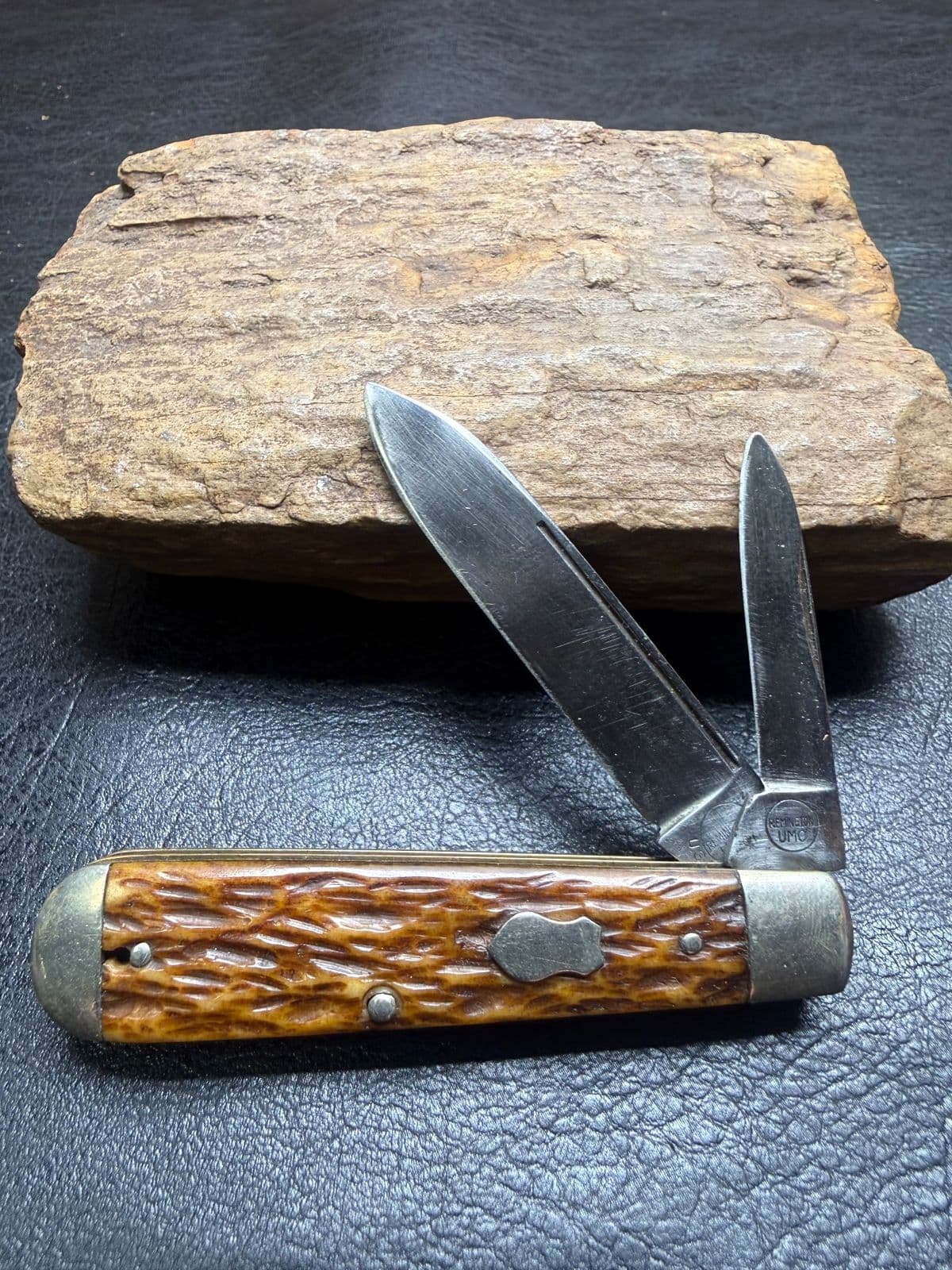
The bullet-shaped shield is one of the most recognized marks in American pocket knives, and two very different knives carry it. One is a Remington made before 1940, a knife collectors chase. The other is an annual reissue made under license since 1982, a good knife with a much smaller price. Here is how to tell which one you are holding.
The short answer: an original has carbon steel blades that have darkened with age and bone or celluloid handles, and it is close to a hundred years old, so it shows it. A reissue usually has stainless blades, Delrin or bone handles that look new, and a box. The Remington name on the tang does not settle it, because reissues carry it too.
Where the Bullet came from
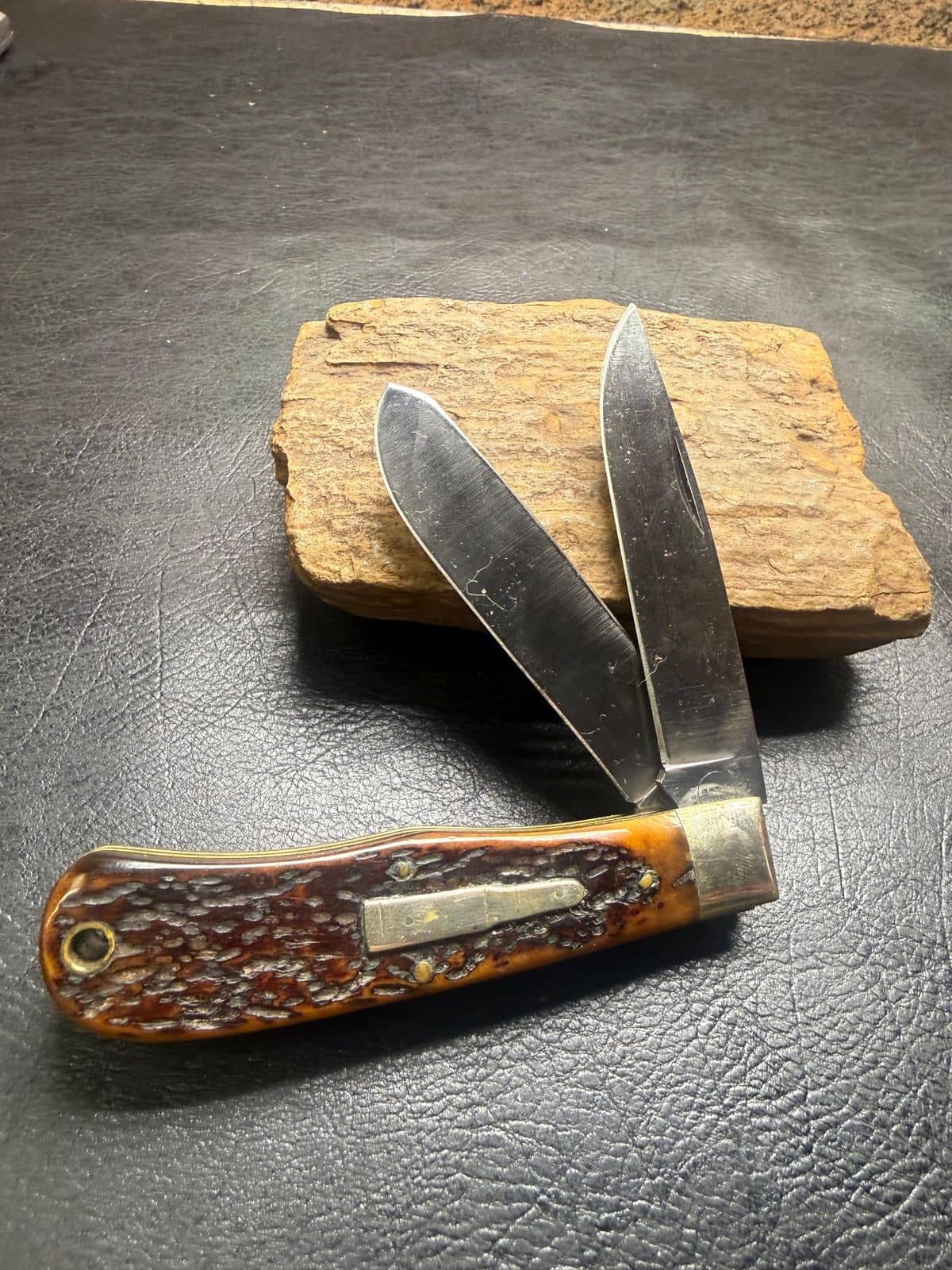
Remington Arms went into the knife business in 1920, building a cutlery factory in Bridgeport, Connecticut. In 1922 it introduced the R1123 Jumbo Trapper, a big two-blade trapper with a shield shaped like a rifle cartridge. Collectors started calling it the Bullet knife, and Remington put the bullet shield on other top-of-the-line patterns.
Remington sold its knife business to Pal Cutlery in 1940, and Pal closed the Remington knife plant in 1950. What Pal made under the Remington name in that decade is poorly documented, so a knife from those years can be hard to place.
In 1982 Remington brought the Bullet back. It commissioned Camillus to make a reproduction of the R1123 with the bullet shield, and that started the annual series. Camillus made the reissues in their early years; Bear & Son made them from 2006 and became Remington's exclusive cutlery licensee in 2015.
Original or reissue: what to check
| Original (1922 to 1940) | Reissue (1982 on) | |
|---|---|---|
| Blade steel | Carbon steel; grays and darkens with age | Usually stainless; stays bright |
| Handles | Bone, or Remington's celluloid | Delrin molded to look like jigged bone until 2004; genuine bone after |
| Age and wear | Close to a century old; expect patina and honest wear | Often unused |
| Packaging | Rarely has a box today | Usually sold boxed as an annual collector knife |
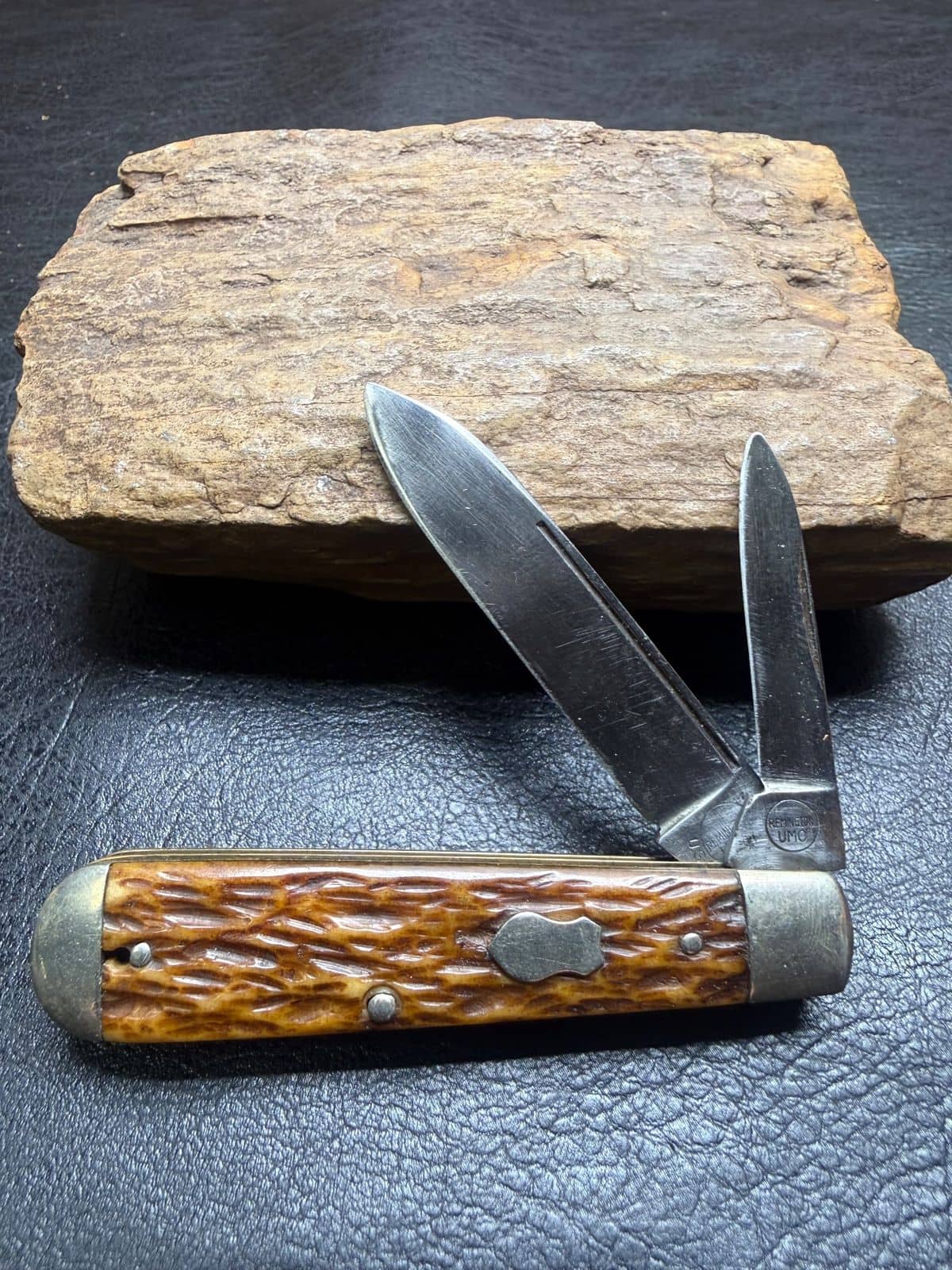
The blades. Pocket knives of the 1920s and 1930s were mostly carbon steel, and carbon steel darkens to gray with handling. Bright, unmarked blades on a knife sold as pre-war deserve a second look.
The handles. Delrin is a plastic, molded and dyed to imitate jigged bone. Up close it is too even: the jigging repeats, and the color is the same all the way through. Real bone varies, and on an old knife it shows wear on the high points.
The condition. A genuine original in mint condition exists, but it is the rare exception. If an "original" looks brand new, ask why.
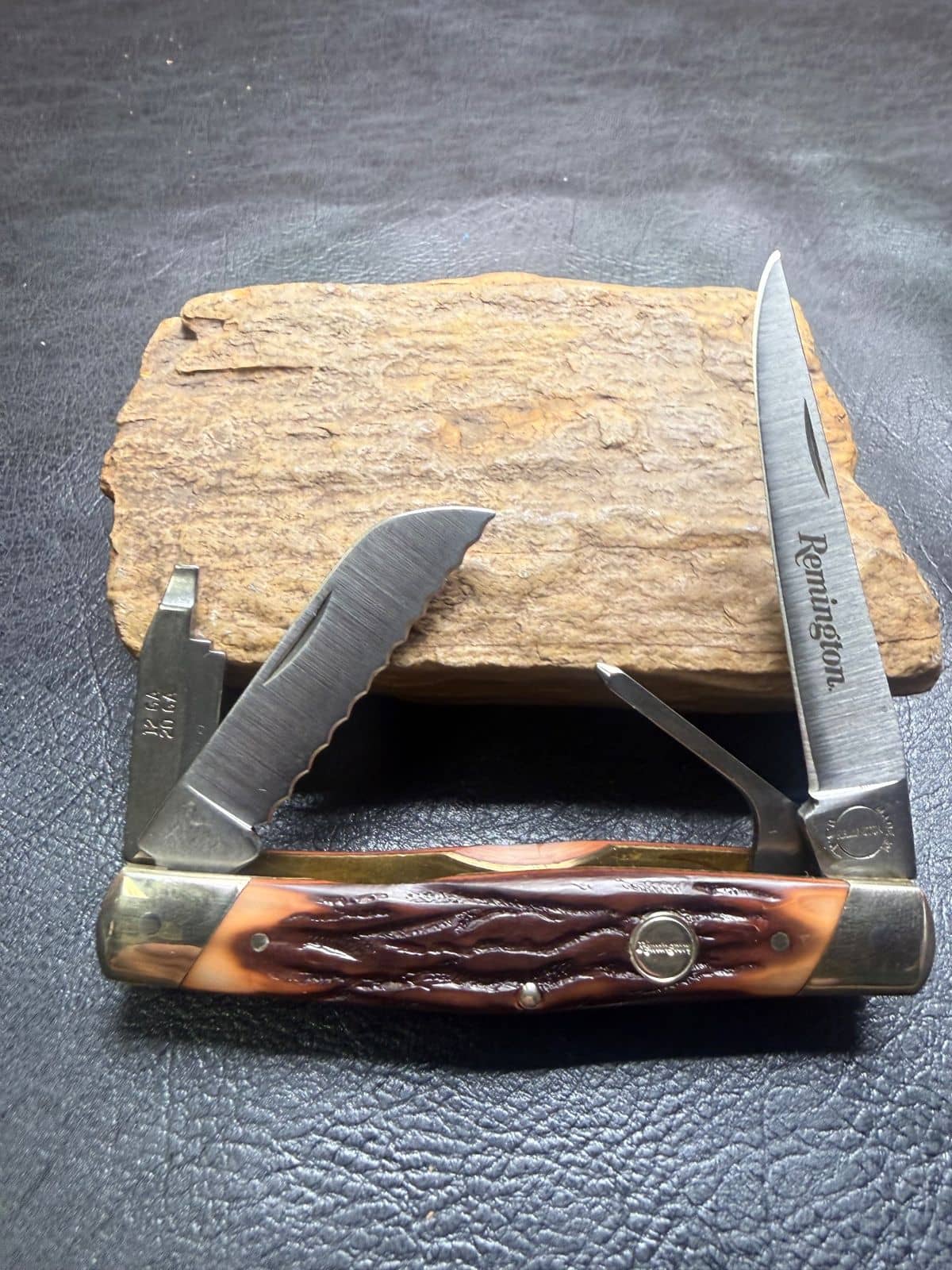
The pattern number. Reissues use Remington pattern numbers, often the original ones. The 1992 R1253 "Guide" that has been through our case is one of them, still in its box. Some later Bear & Son issues used new numbers in the R11000 range.
When a knife will not settle on one side of the line, the shield, the pins and the way the handle is fitted to the liners usually decide it. That is a job for a hand lens, and it is one we are happy to do at the counter.
What they are worth
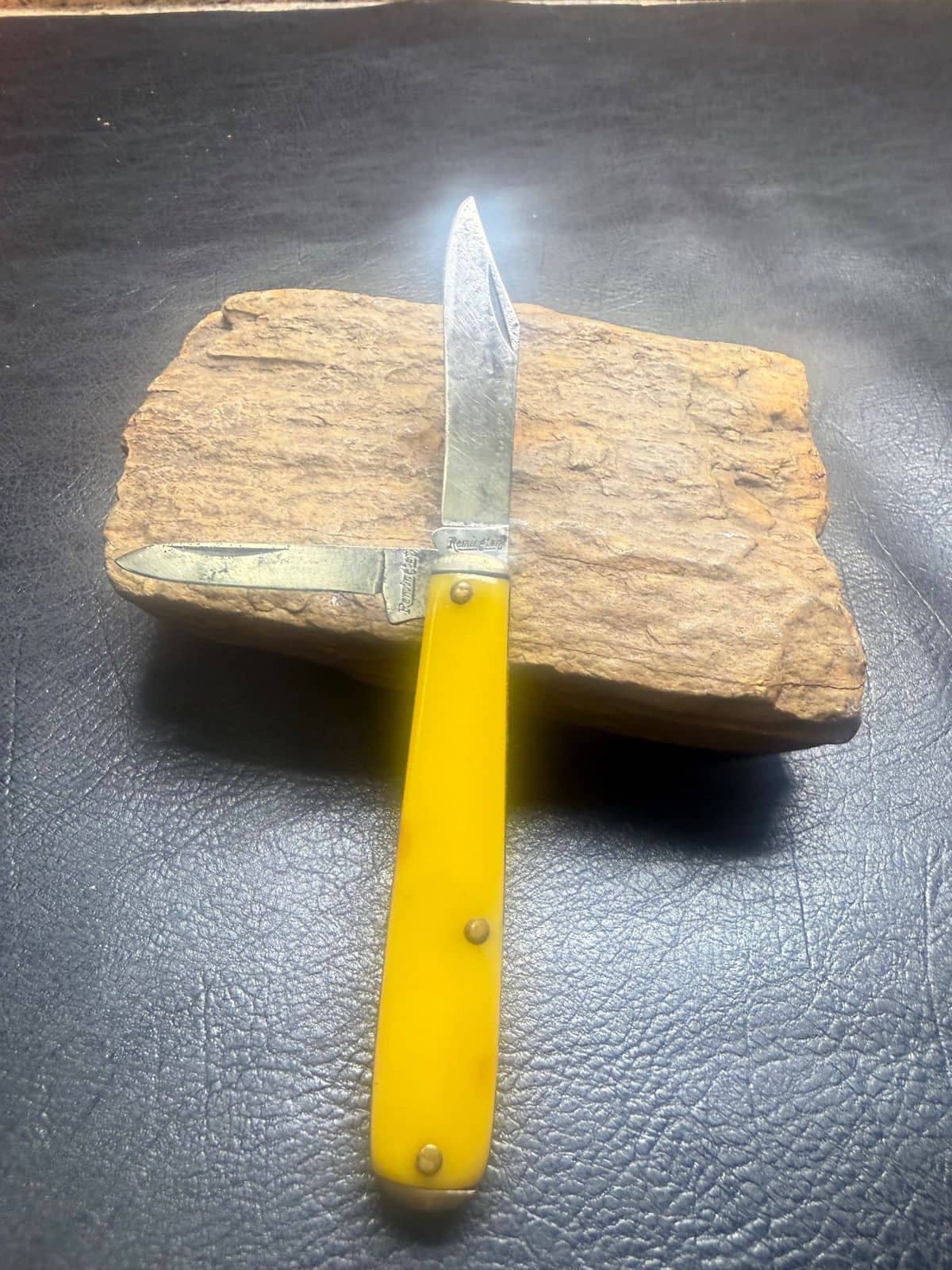
Originals. A clean original R1123 is among the most sought-after American production pocket knives, and the other bullet-shield patterns follow behind it. Value rises with condition, original blades and handles, and a crisp stamp, the same things that drive any vintage knife. Remington's plainer pre-war jack knives and pen knives, without the bullet shield, are affordable vintage and some of the best old carry knives you can buy.
Reissues. A collectible series in its own right, priced at a fraction of an original. Boxed, unused examples with their paperwork bring the most. They make a good gift and an honest way to own the shape without the original's price.
For either, check sold prices for the same pattern and year in the same condition, not asking prices.
Bring it in
If you have a Remington, bullet shield or not, bring it to the store on North Lamar and we will look at it with you. We buy vintage Remington outright and on consignment; if you are not in Austin, send us photos of the tang stamp, both sides of the handle and the blades open.
Shop the case
Common questions
- What is a Remington Bullet knife?
- A Remington pocket knife with a handle shield shaped like a rifle cartridge. The first was the R1123 Jumbo Trapper of 1922; the shield went on to other top Remington patterns, and since 1982 Remington has licensed an annual Bullet knife for collectors.
- How can I tell if my Remington Bullet knife is an original?
- Check the blade steel, the handle material and the box. Originals date from before 1940, have carbon steel blades that darken with age, and have bone or celluloid handles. Most reissues have stainless blades, Delrin handles until 2004 and bone after, and came boxed as annual collector knives. The Remington name alone does not settle it, because reissues carry it too.
- When did Remington stop making knives?
- Remington sold its knife business to Pal Cutlery in 1940, and Pal closed the Remington knife plant in 1950. Remington knives since 1982 are made under license by other companies.
- Who made the Remington Bullet reissues?
- Camillus made the first, a reproduction of the R1123, in 1982, and made the series in its early years. Bear & Son made the annual Bullet knife from 2006 and became Remington's exclusive cutlery licensee in 2015.
- Are Remington Bullet reissues worth collecting?
- Yes, as their own series. They sell for a fraction of an original, and boxed, unused examples bring the most. Buy one because you like it, not as a stand-in for an original.