Guide · 4 min read
How Much Is an Old Case Knife Worth? Vintage Case XX Values Explained
What sets the value of a vintage Case XX knife: the tang stamp era, the pattern and handle, condition and originality. How to check real sold prices yourself, what lowers value, and what to know before you sell.
Updated October 30, 2026 · Austin Blade Co., 7600 N Lamar Blvd, Austin
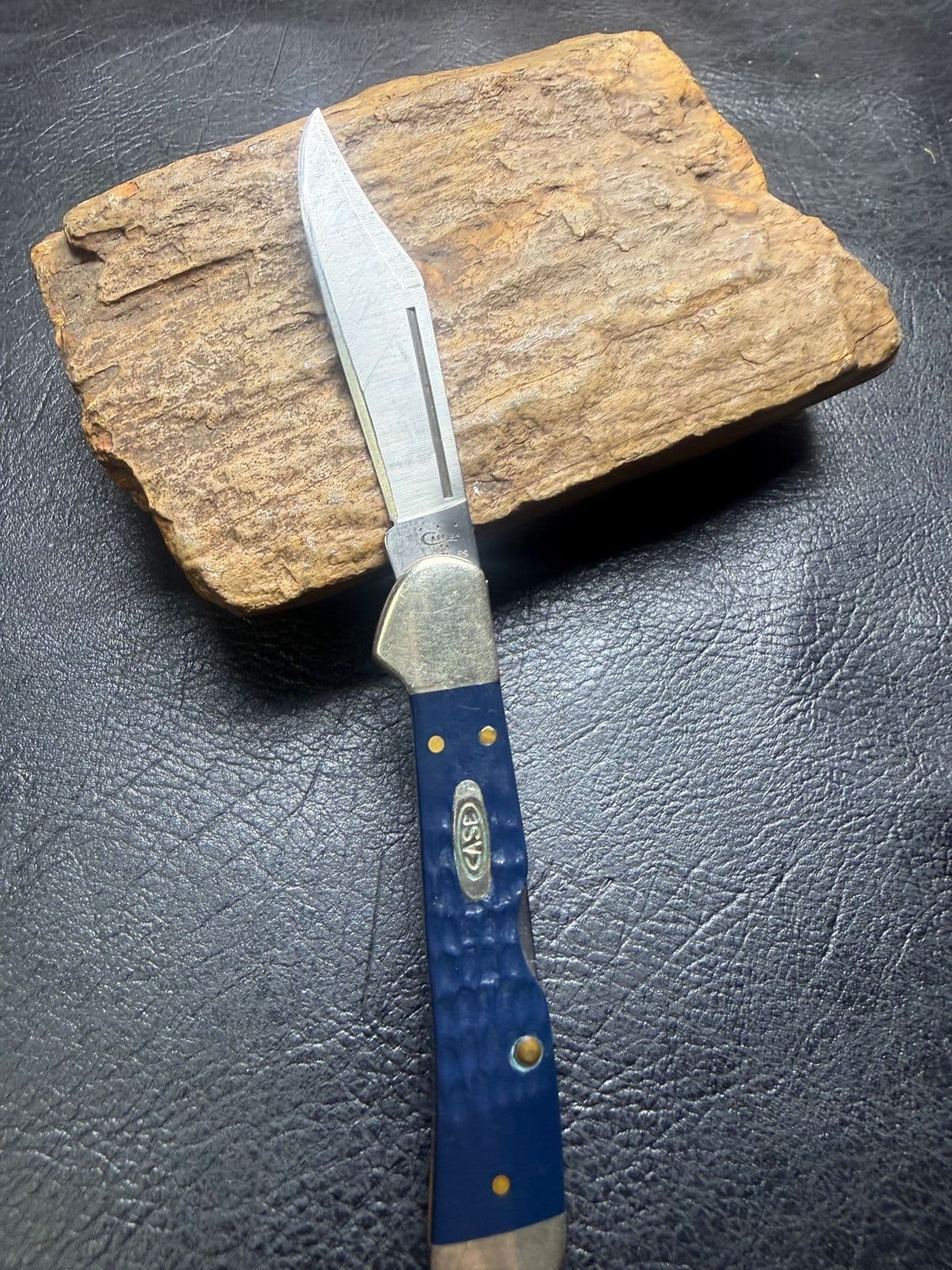
After "how old is it?", the next question we hear about a Case knife is always "what's it worth?" The honest answer is a range: some old Case knives are worth about what a new one costs, and some are worth many times that. Four things decide where yours falls, and you can check most of them yourself in a few minutes.
The short answer: the older the tang stamp, the better the handle material and the more original blade left, the more it is worth. A sharpened-down knife from the 1940s can be worth less than a crisp one from the 1970s. Look up sold prices for the same pattern, stamp and condition, and ignore asking prices.
1. The stamp era
The tang stamp dates the knife, and the era sets the ceiling. Our Case XX tang stamp chart reads every stamp from the 1920s to today.
| Stamp | Years | What it means for value |
|---|---|---|
| CASE TESTED XX | 1920s to 1940 | Scarce. The highest ceiling, when condition allows. |
| CASE XX | 1940 to 1964 | The era collectors chase most. |
| CASE XX U.S.A. | 1965 to 1969 | Close behind, a little more common. |
| Dot stamps | 1970 to 1989 | Affordable vintage. Condition and pattern carry the price. |
| Later stamps | 1990 on | Mostly priced as good knives, except limited editions. |
Age alone does not set the price. It sets how high the price can go if everything else is right.
2. Pattern and handle
The pattern number on the tang tells you what the knife is. The first digit is the handle material, the second the number of blades, the rest the pattern: a 6265 is bone, two blades, folding hunter.
- Handle material matters most. Stag (5) and bone (6) bring more than yellow (3) or black (2) synthetic, all else equal.
- Some patterns are chased by name. Folding hunters, stockmen and trappers in bone and stag are the patterns we get asked for most.
- Bone color carries a premium, and collectors pay extra for bone they call green or red. Bone color is hard to judge in a photo and shifts with the light, so we never price on color from a picture alone.
3. Condition and originality
This is where most of the value is won or lost. On the bench we check:
- How much blade is left, against a clean example of the same pattern. Decades of sharpening can take a blade down to a sliver.
- Walk and talk: the snap when the blade opens and closes. A weak or gritty spring costs value.
- Handles: cracks along the pins, shrinkage, chips, and whether the scales are original.
- The stamp: crisp and readable, or worn and buffed.
- Rust: light surface rust cleans up; pitting stays.
- Points and tips: a broken tip or a reground point.
Originality matters as much as wear. A replaced blade, rehandled scales or a re-stamped tang can turn a collectible into a user, and fakes of the older stamps exist. We check the shield, the handle material and the jigging against the stamp era before we put a price on an older knife.
4. Box and papers
For knives from the 1970s on, especially limited editions, the original box and paperwork add real value. For a 1950s knife, they are a bonus most knives no longer have.
What lowers the value
- Polishing, buffing or wire-wheeling. It removes the patina and softens the stamp.
- Fresh sharpening on a collectible. Every pass takes blade that cannot be put back.
- Replaced parts, cracked handles, broken tips and pitting.
- A stamp you cannot read.
If you are thinking of selling, wipe the knife dry, put a drop of oil on the joint, and leave the rest alone.
How to check the value yourself
- Read the stamp and pattern number. Note the era and the pattern, for example "CASE XX 6265".
- Search sold listings, not asking prices. On eBay, filter to sold items. Asking prices tell you what people hope for; sold prices tell you what the market pays.
- Match condition honestly. Compare your knife with sold examples in the same shape, not with the best one you can find.
- Expect a range. The same pattern can sell for twice as much in clean condition as in worn.
Our guide to how we grade and price collector knives explains the condition terms we use and how comparable sales set our prices.
Selling: outright or consignment
A store buying outright pays less than retail, because it carries the knife, the risk and the wait until it sells. Consignment pays you more of the final price, but you wait for the right buyer. Which is better depends on the knife and how soon you want the money; we will tell you which we would choose.
If you are in Austin, bring the knife to the store on North Lamar and we will date it and value it at the counter, at no charge. If you are farther away, send us photos: the tang stamp, both sides of the handle and the blades open.
Shop and sell
Common questions
- How much is my old Case knife worth?
- Anywhere from about what a new Case costs to many times that. The tang stamp era, the pattern and handle material, and above all the condition decide it. Check sold prices for the same pattern number, stamp and condition, not asking prices.
- Should I clean my old Case knife before selling it?
- No. Wipe off dirt and loose rust with a soft cloth and a drop of oil, and stop there. Buffing, polishing or sharpening removes metal and softens the tang stamp, and collectors pay less for it.
- Are 1970s ten-dot Case knives valuable?
- They are the most affordable way into vintage Case. A clean bone or stag example of a popular pattern sells well; a worn one in synthetic handles is a good knife to carry. Pattern and condition matter more than the dot count.
- Will you tell me what my Case knife is worth?
- Yes. Bring it to the store on North Lamar and we will date it, read the pattern and tell you what comparable knives have sold for. There is no charge.
- Do you buy Case knife collections?
- Yes, one knife or a whole drawer, outright or on consignment. Bring them in or send photos through our sell page.